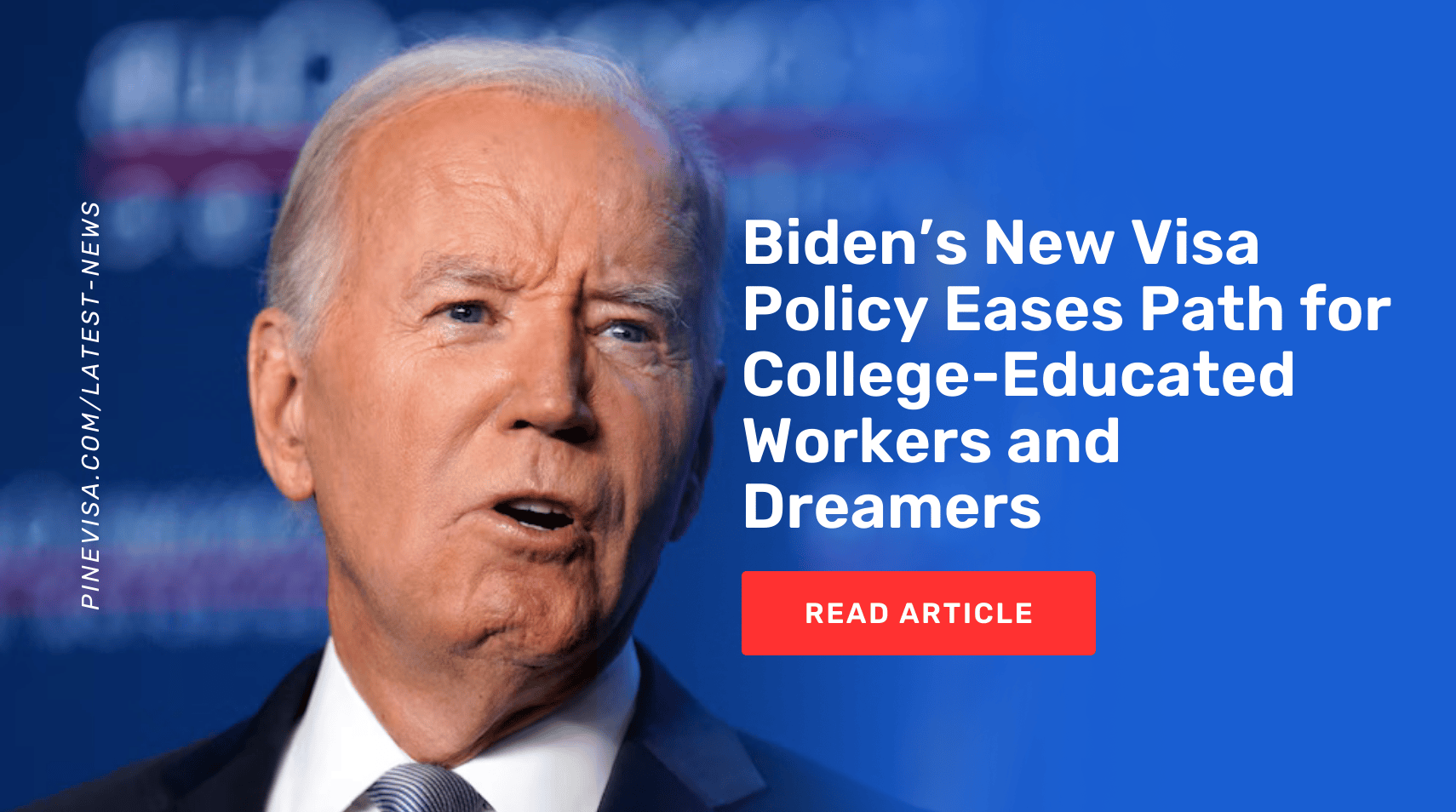
Biden’s New Visa Policy Eases Path for College-Educated Workers and Dreamers
 2024-10-02
In a significant development for noncitizen workers and students in the U.S., the Biden administration is working to streamline the visa process, particularly for those with college degrees and DACA recipients (Dreamers). These changes aim to support the U.S. economy by retaining skilled workers, enhancing workforce participation, and simplifying the complex immigration system.
The new policies, introduced by both the U.S. Department of State and U.S. Citizenship and Immigration Services (USCIS), are expected to create a more accessible pathway for international graduates and workers to contribute to key industries that require specialized skills.
Easing the Visa Process for College-Educated Workers
The State Department has introduced updates to the visa process, particularly aimed at noncitizen workers who possess college degrees. Traditionally, the U.S. immigration system has placed numerous barriers in the path of these individuals, often requiring lengthy wait times, extensive paperwork, and unpredictable visa lotteries.
The new rules simplify and expedite temporary visas for foreign workers with degrees in fields like STEM (Science, Technology, Engineering, and Mathematics). These fields are often in high demand in the U.S., and employers consistently report shortages of qualified workers, making this policy change a strategic move to fill those gaps.
According to the State Department, the revisions to the visa process make it easier for these workers to obtain temporary work visas, such as the H-1B. These visas allow U.S. companies to hire skilled workers from abroad, enabling them to meet their labor needs and stay competitive in the global market.
However, some concerns remain regarding the effectiveness of the changes, especially given the limited number of H-1B visas available each year and the complexities of the application process. Nonetheless, this move is a step toward addressing some of the current challenges in U.S. immigration policy.
Impact on Dreamers and U.S. Graduates
In addition to easing visa restrictions for foreign workers, the Biden administration is focusing on helping DACA recipients, often referred to as "Dreamers." These individuals, who were brought to the U.S. as children and lack formal immigration status, have long been in limbo regarding their future in the country.
Many Dreamers have completed higher education in the U.S. and possess valuable skills that the U.S. economy could benefit from. The administration’s new policy makes it easier for Dreamers to apply for work visas if they have job offers in fields related to their college degrees.
This is a crucial development for both Dreamers and U.S. employers. Many Dreamers graduate from U.S. universities but face legal uncertainty regarding their ability to work and live in the country long-term.
The new policy offers them a clearer pathway to obtain work authorization and potentially transition to permanent residency. Employers also benefit from this change, as they can retain employees with valuable education and skills without facing the bureaucratic hurdles that have previously hindered the employment of Dreamers.
New Visa Pathways and Employer Sponsorship
The recent visa reforms also highlight the importance of employer sponsorship for foreign workers and graduates. Under the new rules, employers are encouraged to sponsor international workers for visas, such as the H-1B or O-1, provided they can demonstrate a need for specialized skills.
This move helps address the critical shortage of talent in industries such as technology, healthcare, and engineering. It also emphasizes the role that employers play in shaping immigration policy by facilitating the entry of skilled workers into the U.S. workforce.
Additionally, the new policy offers a streamlined process for graduates of U.S. universities who hold temporary visas like the F-1. Graduates with job offers in their field of study can more easily transition to work visas, enabling them to contribute to the U.S. economy immediately after completing their education. This helps prevent the loss of talent that often occurs when international students are forced to leave the country due to visa restrictions.
Possible Challenges and Limitations
Despite the promising aspects of these policy changes, there are still challenges that need to be addressed. One major issue is the cap on H-1B visas, which limits the number of foreign workers who can be employed in the U.S. each year.
Although the State Department’s reforms aim to simplify the process, they do not increase the number of available visas, which means competition for these spots remains high. Employers may still struggle to secure the visas they need to fill critical positions, particularly in industries with a high demand for skilled labor.
Moreover, there is concern that the new policies may not go far enough to address the systemic issues within the U.S. immigration system. While the changes make it easier for some noncitizen workers and graduates to obtain temporary visas, they do not provide a long-term solution for those seeking permanent residency or citizenship. The pathway to citizenship remains complex and uncertain, particularly for Dreamers and other individuals who lack formal immigration status.
Long-Term Economic Implications
The Biden administration’s efforts to streamline the visa process have the potential to significantly impact the U.S. economy. By making it easier for college-educated workers and Dreamers to obtain work authorization, the U.S. can retain top talent and reduce the brain drain that occurs when skilled individuals are forced to leave the country. This, in turn, benefits U.S. employers, who can access a broader pool of qualified candidates to fill key positions in their organizations.
For industries such as technology, healthcare, and engineering, the availability of skilled workers is critical to maintaining competitiveness in the global market. By easing visa restrictions, the U.S. can better meet the demand for workers in these fields, ensuring that businesses have the talent they need to innovate and grow.
Additionally, the policy changes could help to address the labor shortages that have plagued many industries in recent years, particularly as the economy continues to recover from the impacts of the COVID-19 pandemic.
What To Expect Onwards?
The Biden administration’s recent efforts to simplify the visa process for noncitizen workers and Dreamers represent an important step toward modernizing the U.S. immigration system.By making it easier for college-educated workers to obtain temporary visas and encouraging employer sponsorship, the U.S. can retain top talent and support its economic growth.
However, challenges remain, particularly regarding the cap on H-1B visas and the long-term pathway to citizenship. As the U.S. continues to navigate these issues, the new policies offer hope for a more inclusive and dynamic workforce.
Other News
USCIS Fee Hike: What to Expect in April 2024
 2024-04-18

Visa Bulletin for May 2024
2024-04-18
Backlog Percentage Reached to 8% in March
2024-04-18
Biden’s New Visa Policy Eases Path for College-Educated Workers and Dreamers
2024-10-02
January 2025 U.S. Visa Bulletin: Key Updates and Insights
2024-12-12

May 2025 Visa Bulletin
2025-04-17

June 2025 Visa Bulletin: New Updates
2025-05-15
July 2025 Visa Bulletin
2025-06-11
Flowbite is an open-source library of interactive components built on top of Tailwind CSS including buttons, dropdowns, modals, navbars, and more.
Check out this guide to learn how to get started and start developing websites even faster with components on top of Tailwind CSS.